Introduction
Driving alone is part of everyday life for millions of people. You may be travelling to work, returning home late, driving between cities or simply taking a short trip without another family member in the vehicle. Most journeys end without any problem.
But if an accident happens while you are alone, one important challenge can appear immediately: who will inform the people who care about you? If you are conscious and able to use your phone, you may be able to call someone yourself. But an accident can leave a driver injured, confused, unconscious or temporarily unable to operate a phone. That is why solo driving safety should include more than careful driving. It should also include a simple communication plan for situations where you may not be able to explain what happened yourself.
Why an Accident While Driving Alone Can Be Different
When someone is travelling with family or friends, another person may be able to make phone calls, explain the location or contact relatives.
A solo driver may not have that immediate support.
After an accident, the driver may: be unable to reach the phone, have an injured hand, be disoriented, not know the exact location, have a damaged or locked phone, or be unable to communicate at all. Meanwhile, family members may know only that the person was travelling. They may not know an accident has occurred. The problem is not always a lack of people willing to help. Often, it is simply that the people nearby do not know whom they should contact.
The First Priority Is Always Safety
After any road accident, personal safety comes first. If you are conscious and able to move safely, try to assess the immediate surroundings. Avoid standing in an unsafe traffic area. If there is fire, smoke, fuel leakage or another immediate danger, move to a safer location where possible without creating additional risk. If anyone is injured or professional assistance is required, contact the appropriate emergency services as soon as possible. BT Conexa is a communication and safety-support platform. It does not replace ambulance services, police, fire services or other professional emergency responders.
If You Can Use Your Phone
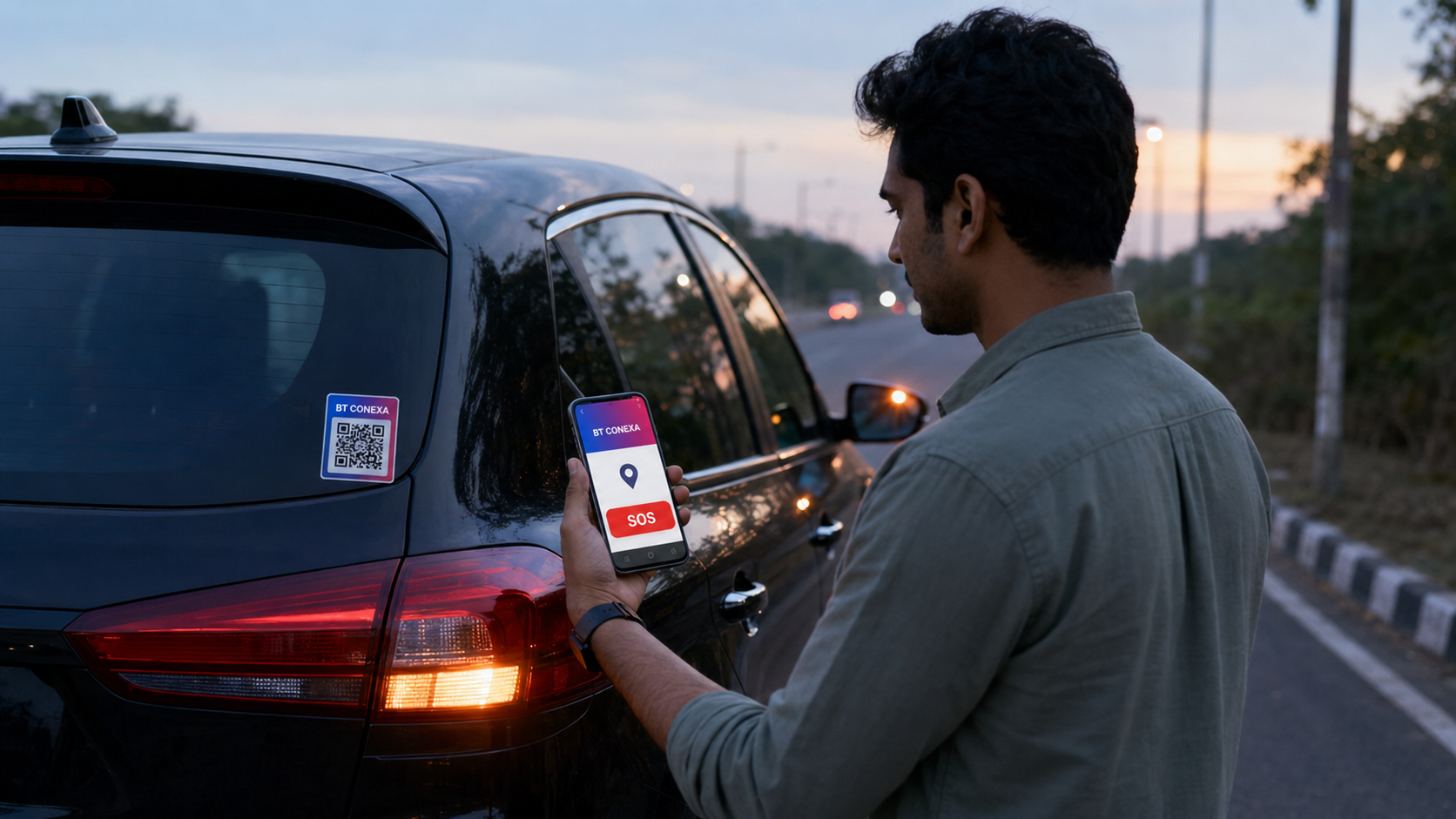
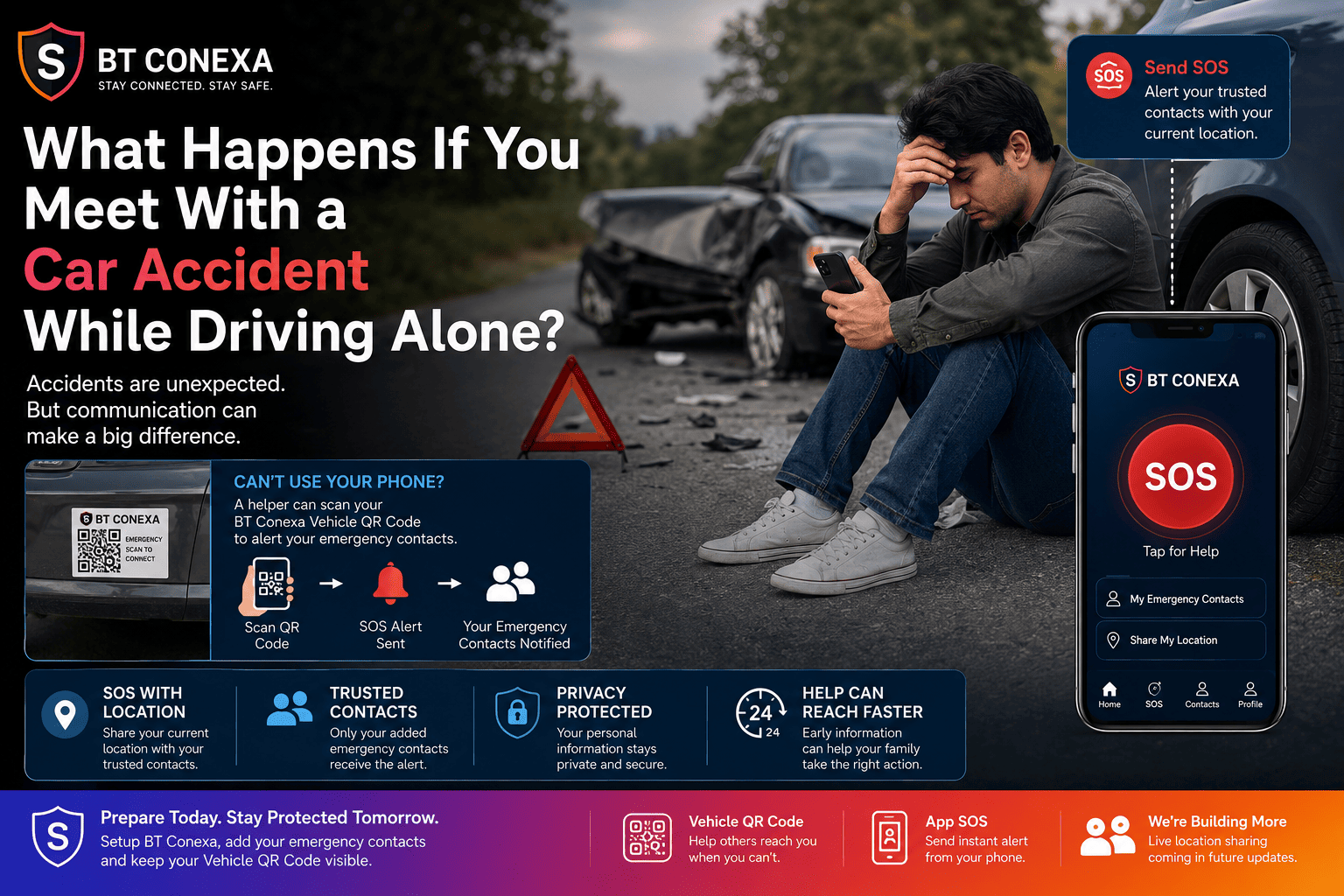
If BT Conexa is installed and configured on your phone and you are able to operate the device, the app's SOS feature provides an additional communication option. The registered user can open BT Conexa and initiate SOS. The configured emergency contacts can receive the supported SOS alert with available current-location information.